Let the Robots Do the Grunt Work
Spend five minutes in any writers’ group or art forum right now and you’ll feel the anxiety. AI is coming for the novelists, the illustrators, the musicians. Someday soon, the story goes, you’ll type a prompt and a machine will spit out a masterpiece, and the human artist will be obsolete.
I don’t buy it. By day, I’m a software developer, and I use AI tools constantly. I’ve watched them reshape how my team works. What I haven’t seen is them replace the part of the job that actually matters. AI is a productivity multiplier for human creativity, and if we use it well, it frees us up to do more creative thinking.
The Myth of the Creative Machine
AI models are trained on what humans have already made. At their core, they remix and predict. They’re extraordinarily good at producing something that looks like what came before, but they don’t pull new ideas out of the void.
More importantly, they have nothing to say. Real creativity comes from lived experience: grief, joy, boredom, that weird summer job you had at nineteen. An algorithm has never been heartbroken or terrified or delighted. It can imitate the shape of those feelings, but it can’t supply the substance.
What AI Actually Does for Developers
In my day job, AI writes boilerplate code, tracks down simple bugs, and churns out the repetitive functions that every project needs and nobody enjoys writing. That hasn’t made developers obsolete. It’s just taken the most tedious, robotic parts of the job off our plates.
The same thing applies to writing and art. AI can handle the grunt work: roughing out an initial outline, brainstorming a list of possible character names, catching basic grammar slips. None of that is the art. It’s the scaffolding around the art.
The Shift: From Typist to Director
Here’s where it gets exciting. When you aren’t bogged down in the minutiae, the basic “how,” you get to spend your energy on the “what” and the “why.” What is this story really about? Why does this character make that choice? Does the pacing earn the ending?
I think creatives are going to evolve into directors of their own work. Less time wrestling with mechanics, more time shaping the big picture: structure, theme, pacing, and the emotional punch that makes a reader stay up until 2 a.m. to finish one more chapter.
Just Another Tool
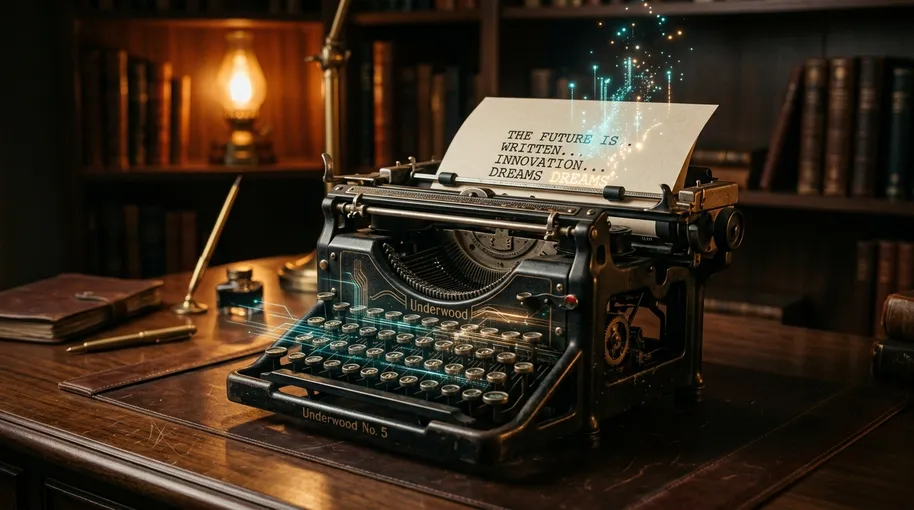
When the word processor replaced the typewriter, people didn’t stop writing great novels. The process just got smoother. AI is the next tool in that line.
So let the robots do the grunt work. Hand off the mundane tasks, and protect your energy for the creative leaps that only a human mind can make.